
What is a seizure?

0
%
feel a lack of information and resources are barriers to accessing support or treatment
they need

0
%
of people with epilepsy experience stigma, ranging from subtle biases to significant misunderstanding.

0
in 3
Nearly 2 in 3 people emphasise the urgent need for more community support and understanding to improve their quality of life

A seizure is a sudden burst of electrical activity in the brain that causes a temporary disturbance in the way brain cells communicate with each other.
The kind of seizure a person has depends on which part and how much of the brain is affected by the electrical disturbance that produces the seizure. A seizure may take many different forms, including a blank stare, uncontrolled movements, altered awareness, odd sensations, or convulsions. Seizures are typically brief and can last anywhere from a few seconds to a few minutes.
Seizures are divided into two main categories:
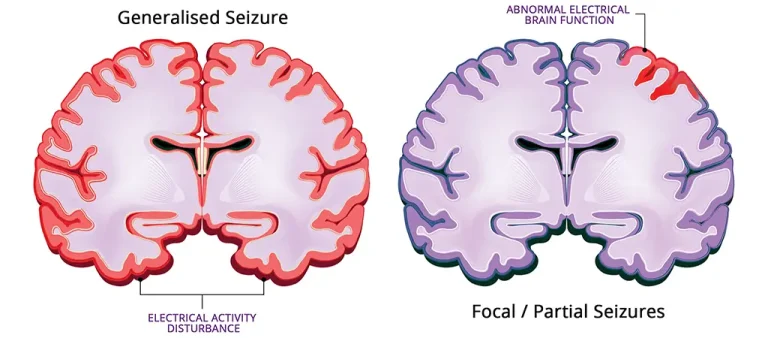
Generalised Seizure
- Involve both hemispheres of the brain
- Two common types are absence seizures (petit mal seizures) and tonic-clonic seizures (grand mal seizures)