



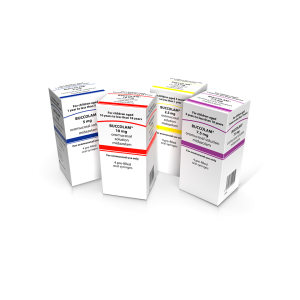
Buccal midazolam is an emergency rescue medication used to stop a seizure if one occurs in a child with epilepsy. The below information is advice for parents or carers who may need to give rescue medication to a child with epilepsy who is having a seizure.
Buccal midazolam – is given into the buccal cavity (the side of the mouth between the cheek and the gum).
Before giving buccal midazolam
Some medicines are not suitable for people with certain conditions, and sometimes a medicine may only be used if extra care is taken. For these reasons, before you start using buccal midazolam for your child it is important that their doctor knows:
- Check you have the child’s agreed individual seizure care plan.
- If your child has a long-term breathing problem such as asthma or if they have breathing problems whilst sleeping (sleep apnoea).
- If your child has any problems with the way their kidneys or liver work.
- If your child has any problems with their heart.
- If your child has a condition called myasthenia gravis which causes muscle weakness.
- If your child is pregnant or breast-feeding.
- If your child has ever had an allergic reaction to a medicine.
- If your child is taking any other medicines. This includes any medicines which are available to buy without a prescription, as well as herbal and complementary medicines.
How to use buccal midazolam
If you are not sure how to use Buccal ask your doctor or pharmacist to show you.
- The dose is the full contents of one syringe:
- Remove the syringe from the packing case.
- Unscrew and remove the amber plastic cover.
- Put the tip of the syringe into the back of the space between the inside of the cheek and the lower gum.
- Slowly press the plunger about halfway in.
- Your child's seizure should stop completely within a few minutes of giving buccal midazolam.
Ambulance
If your child’s seizure has not stopped within ten minutes of it starting or within five minutes of giving buccal midazolam, you should call an ambulance. Hold on to the empty syringe so that you can show the paramedic when they arrive.
You should also call an ambulance if:
- Your child's breathing slows down or stops or their lips have turned blue.
- Your child appears to be in pain.
- You think your child may have injured themself during the seizure.You are unable to give all the medication or you spill some of the contents of the syringe.
- You think you have given your child too much medication.
- Your child starts to experience another seizure despite being given buccal midazolam.
- Do not give a second dose of buccal midazolam unless specifically instructed by a doctor or paramedic.